
About
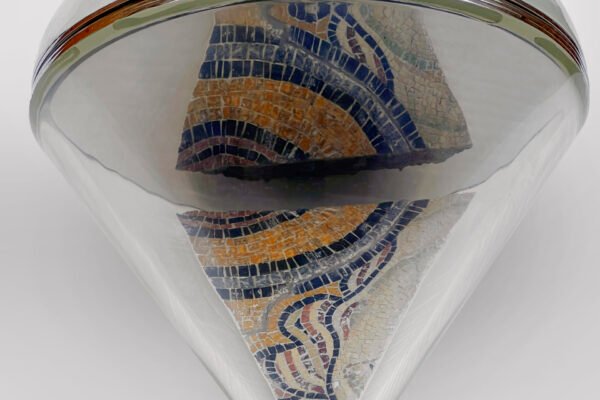
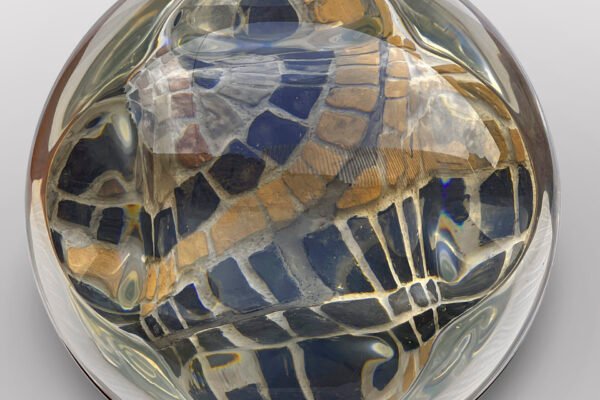
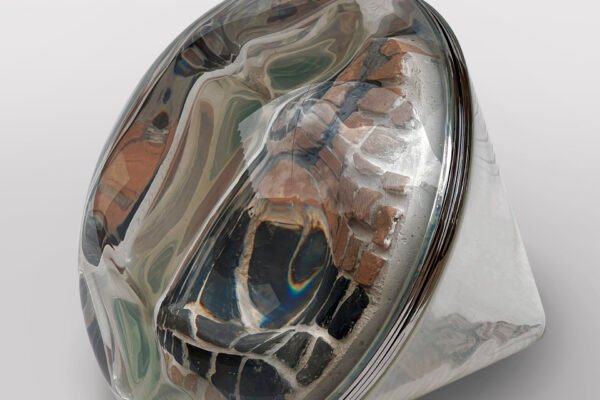
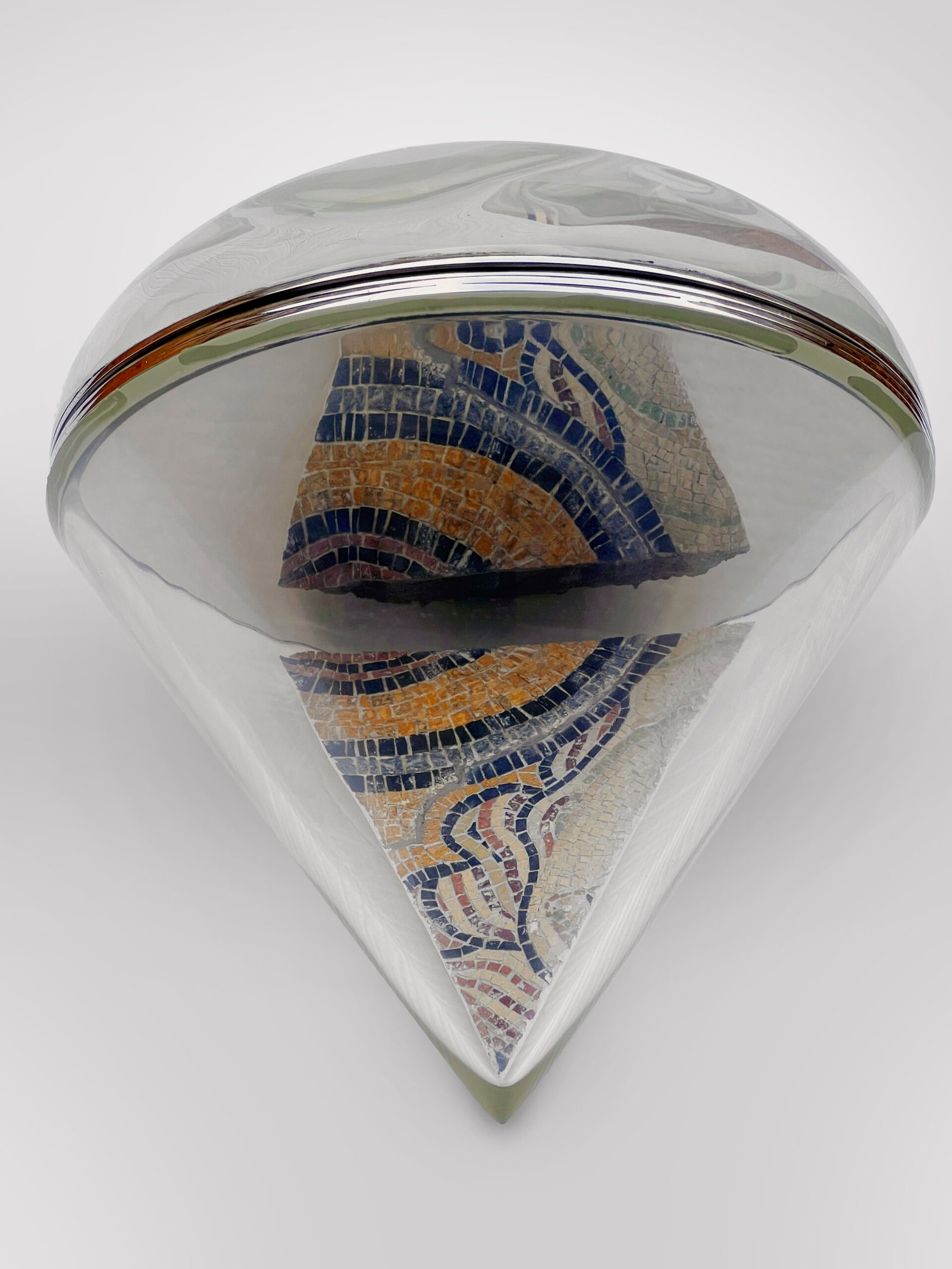
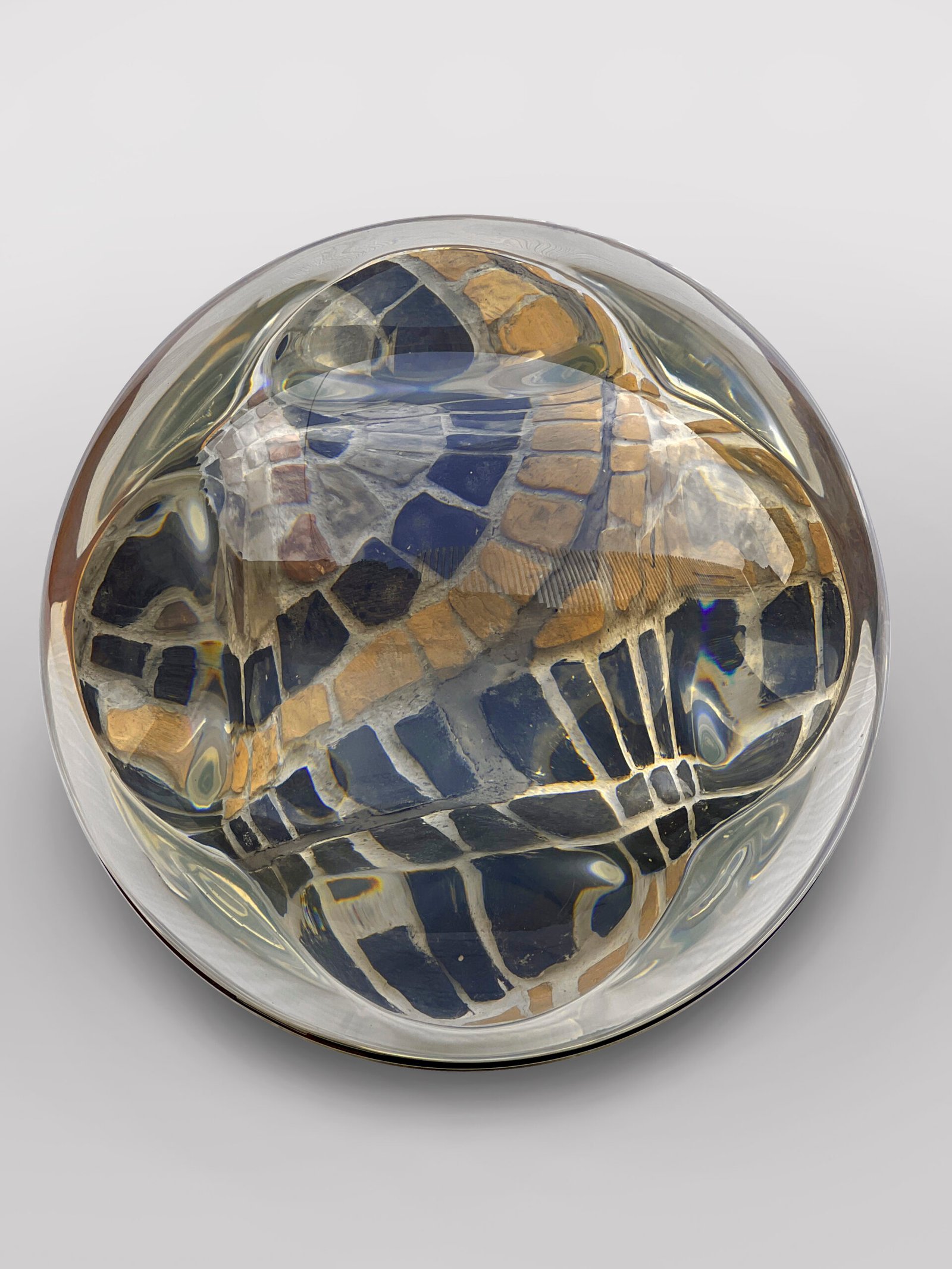
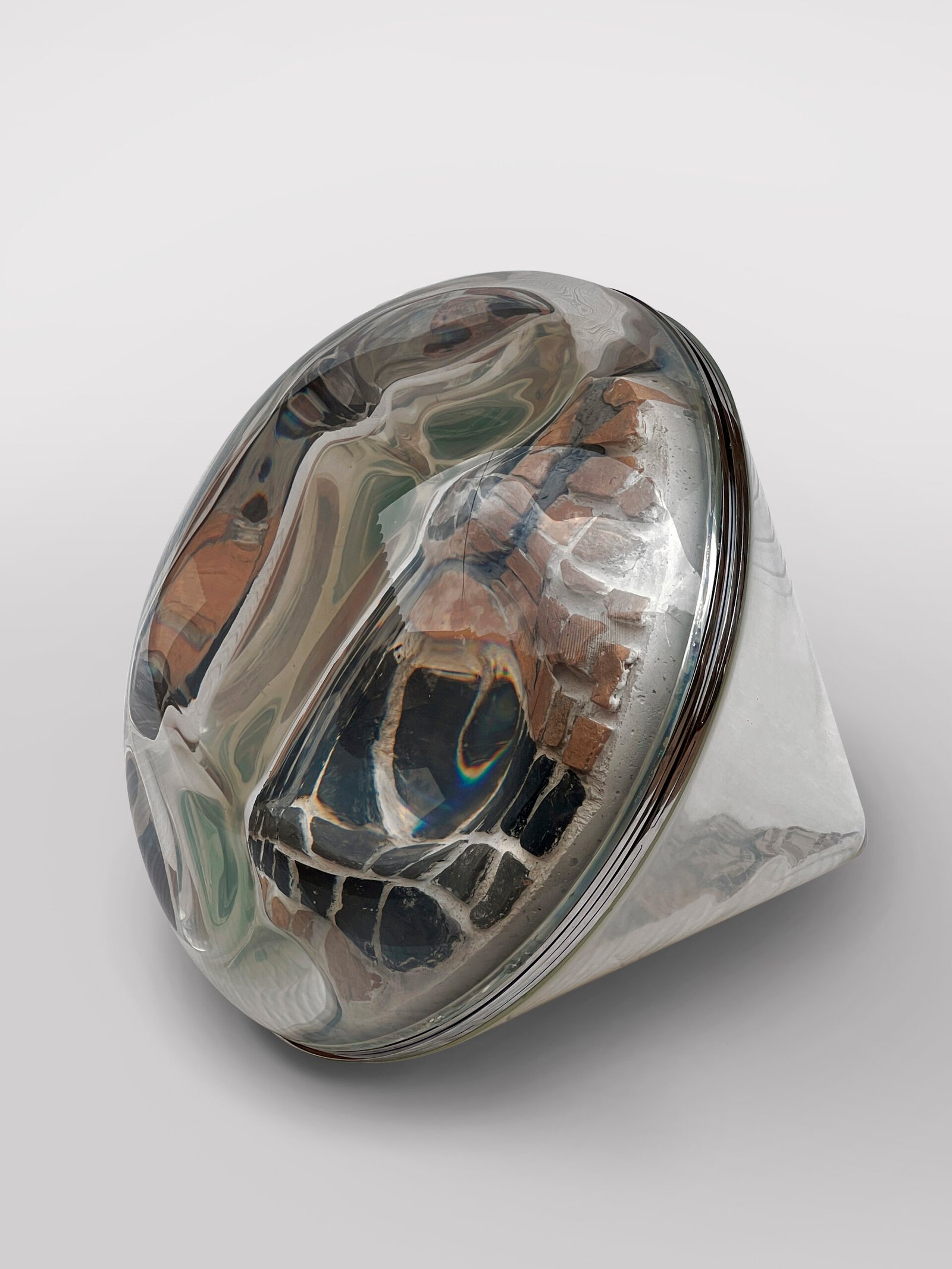
Byzantine mosaic fragment from a medieval chruch in Torcello alongside a 19th-century forgery.
The mosaic panel, magnified ten times, appears to depict the right side of a human head, most likely an angel or saint, positioned beside the halo of a second figure now largely lost. Its stylistic features, elongated facial proportions, finely rendered hair, and the treatment of the halos, place the work within the Byzantine-influenced tradition of Venetian mosaic production, broadly dated to the 11th–12th century. Comparable examples can be found in the Basilica of Santa Maria Assunta in Torcello.
Nevertheless, a closer examination under magnification reveals a more complex history of alteration. Two distinct systems of tesserae and mortar are clearly visible, separated by a third, darker binding material forming a linear boundary. The lower section, including the surviving halo, shows consistent weathering, while the upper portion, particularly the face, exhibits sharper tesserae edges and a coarser mortar, indicating a later intervention. These discrepancies suggest that the original figure, likely the angel, may have been removed and replaced during a subsequent restoration phase. Such interventions are historically known in Venice during the mid-19th century, when extensive restorations involved the replacement of medieval fragments with modern copies. Many of the original figures and fragments that were removed, found by some miracle their way into the hands of private collectors or international museums.