

About
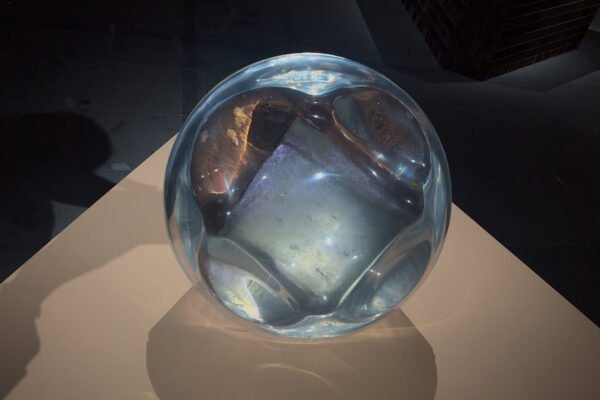
Ancient corroded glass fragment from early Venetian production predatating the relocation to Murano.
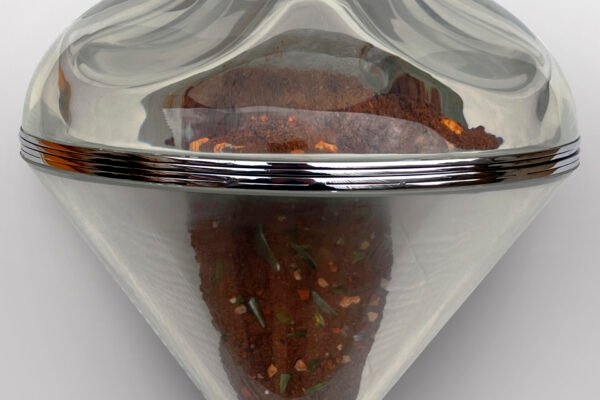
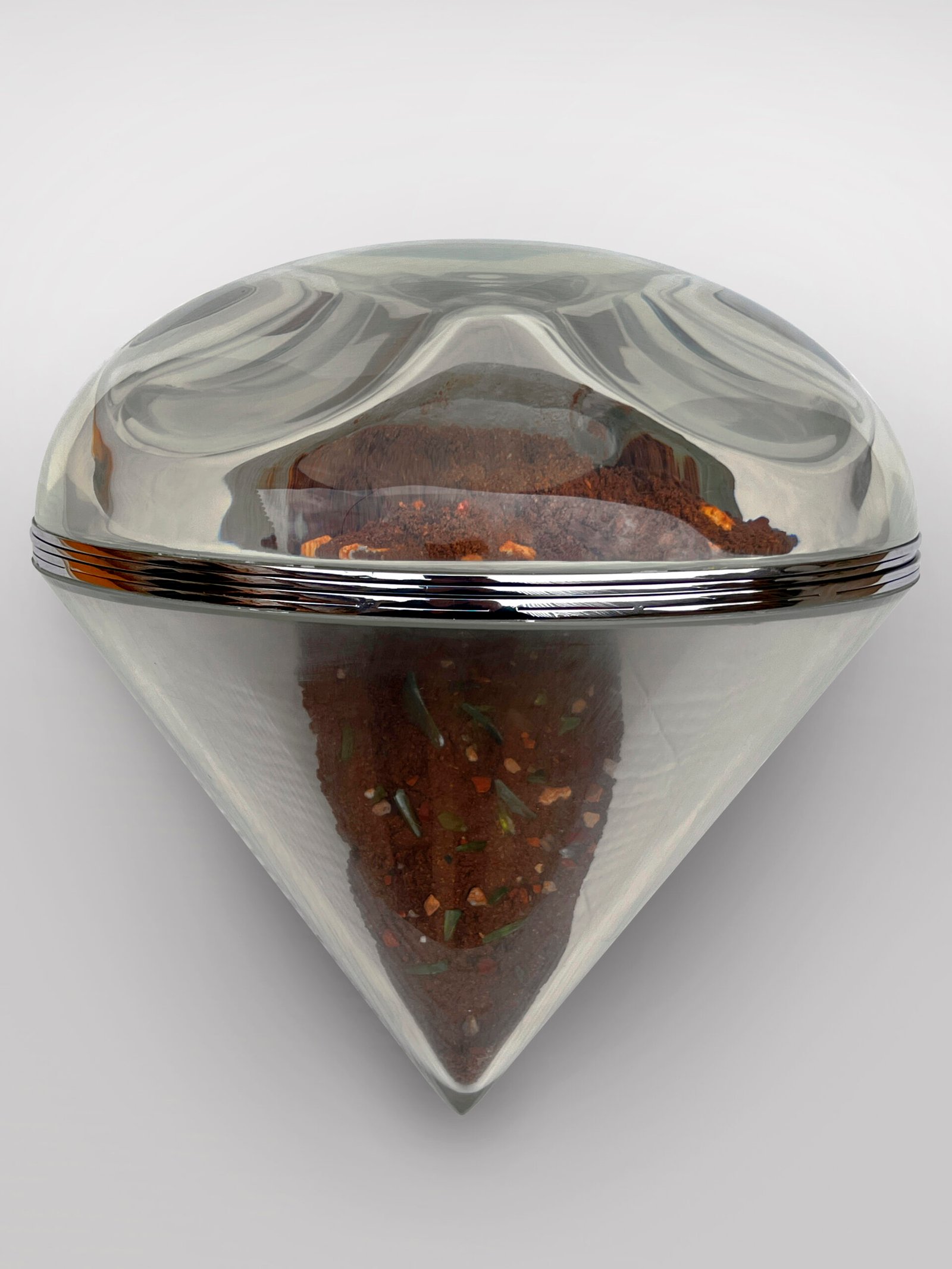
The archaeological context reveals a dense deposit of brownish sediment containing numerous inclusions, fine pebbles, pottery sherds, and a high concentration of glass fragments of varied forms and colours. This assemblage suggests either a localised area for the disposal of broken vessels or the presence of an early glass recycling activity within the urban fabric of Venice. Situated within the city and stratigraphically predating 1291 CE, the deposit likely belongs to a period prior to the relocation of all glass production to Murano by Venetian authorities.
Magnified twenty times, the recovered fragment displays the material characteristics of this early production phase. Along the rim, visible impurities and spotted irregularities indicate manufacturing techniques still lacking the refinement of later Murano craftsmanship. Prolonged burial within the sediment has further transformed the surface: successive layers of corrosion and patina now produce iridescent reflections, resulting from long-term chemical interaction between glass and its surrounding soil environment. The fragment thus records both an early technological stage and the slow material reconfiguration of glass which makes old vessels highly considered.